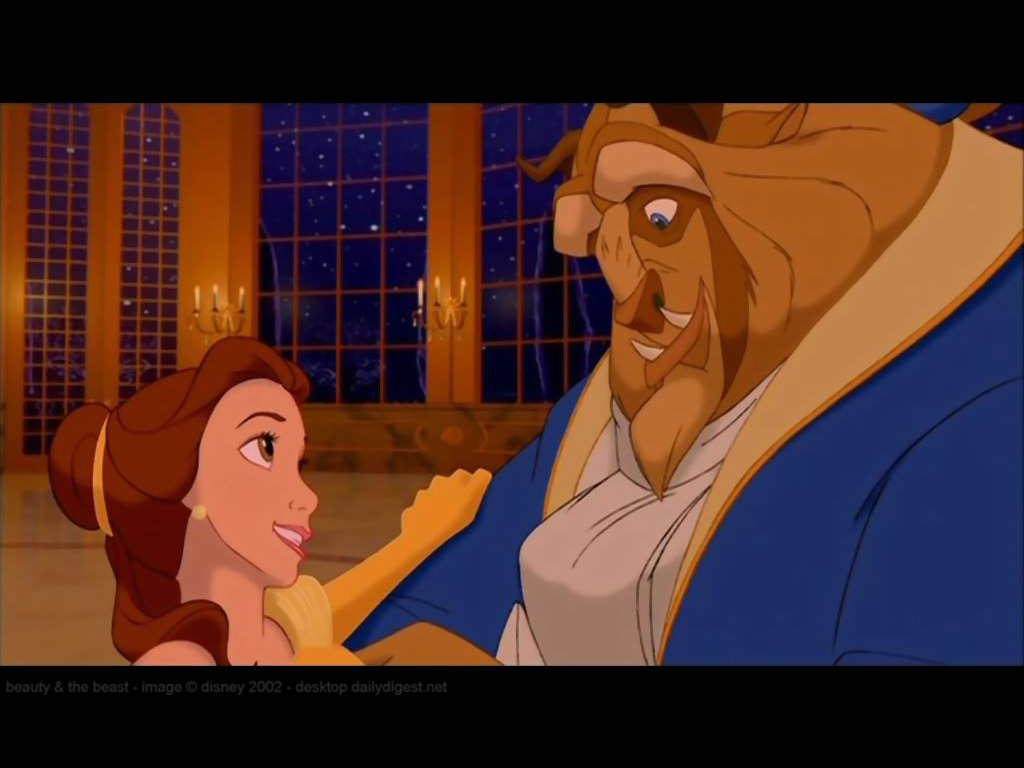
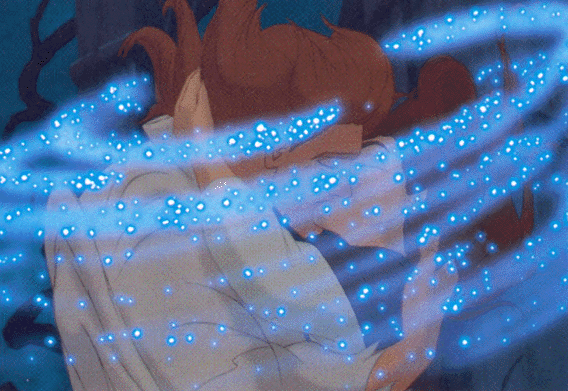
- Fairytale - starts with "Once upon a time, in a far away land.." - Narrator introduces the story in a voice over, with still images of stain glass windows on the screen like story time with a book.

- Prince, Princess, enchanted fairy, castles, enchanted objects, love spells, --- Fairytale conventions.
- Song - much like a musical, broadway style. Singing and dancing, everyone in the town knows the routine.
- Belle- the outsider, outcast, "perculiar" - unsatisfied with her life as it is, wants more. "There must be more to this provincial life".
- Belle is the only one in the town dressed in blue, - to stand out from everyone else and show she doesnt fit in/is different.
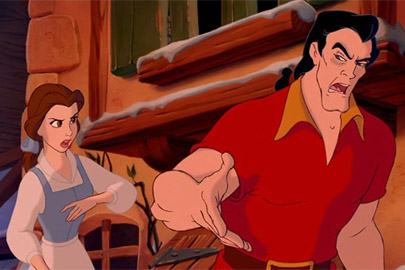
- True love - Gaston wants Belle to be his wife, but he doesn't know her for who she really is, he just wants her for her looks, and for a challenge. The Beast knows who she really is and loves her, - gives her a library and reads with her. (Her favourite thing to do is read).
- Broken family - There is just Belle and her father, doesn't explain here her mother is. They are very close though, showing the importance of family. She rescues him from the tower, and sacrifices herself for him, then he runs for help to rescue her, and sticks to his guns even after being called crazy, then she goes back for him when she sees he's sick - strong love for each other.
- Vulnerablity - Maurice gets lost in the woods, looses his hore, trapped in the dungeon at the Beast's castle. Belle is vulnerable, locked in the prison, alone with the Beast - before we see his characters inner softness. The Beast is vulnerable as he doesn't feel he's good enough for Belle, he also needs her to love him back to break the spell, but needs a lot of help from the enchanted objects.



- Family - Chip and Mrs Potts, she mothers him as well as Belle. The enchanted object, strong friendship - live like a family together, banter +family positions, the child - Chip, the mothers - Mrs Potts, and the wardrobe, the dog - the stool, the uncles/brothers - Cogsworth and Lumier.
- Femininity -
 Belle wants more from life, but is discouraged from thinking or reading or following her dreams. "It's not right for a woman to read, soon she starts getting ideas, and thinking." She is pretty and feminine, wears a dress with a bow, caring and compassionate. She's also helpful - feeds the chickens, helps her Dad and helps clean up after his invention explodes. Tradition representation of women. - Mrs Potts and the Wardrobe are motherly and caring, also calming when the Beast has a bad temper. The "Bimbettes" (three townswomen) and the feather duster in the castle are represented as airheads. Negative representation.
 - Masculinity - Gaston is a man's man, hunter, eats raw eggs, big muscles, chews leather, alpha male - loved by everyone "Ev'ry guy here'd love to be you Gaston". All the men in the pub seem very boisterous, masculine, "manly", Belle's dad Maurice is more gentle and kind-hearted. More feminine in that respect.

- The Beast - has a hardened heart from being under a curse for so long. Bad temper, animalistic, "monster", - though with good intentions, his character softens over the course of the film and as his relationship with Belle develops.
- Gaston is the real monster of the story.

- Friendship - Belle is welcomed into the enchanted castle - (Be our Guest)
- Curiosity and Discovery- Belle going to the west wing without permission - getting into trouble.
- The Beast is first able to express his love for Belle through protecting her and Phillipe against the wolves in the forest.
- Belle and the Beast, the outsiders, the only ones who wear blue.
- In the extended version -> the song "Human Again" shows that the enchanted objects of the castle want more to life too, even though they are so happy and jolly.
- You know the Beast's love is true, because he releases Belle so she can rescue Maurice again.Gaston is good looking and evil, the Beast looks like a monster but has inner beauty - teachers not to judge people by appearance.

- The enchanted objects work together as a team, to save each other against the mob when the castle is under attack.
- The Beast won't fight back against Gaston, but Gaston still carries on hurting him, - showing who the real evil is. When the Beast has a chance to kill Gaston he doesn't - he has a good heart and doesn't use his strangths for evil. His love for Belle has made him a better person. Gaston is the real monster, he comes back to stab the Beast when he's at his most vulnerable.
- Good vs evil show down for true love.
- Belle's love saves the Beast's life.
- At the beginning of the story, the Beast was good looking but heartless, a lot like Gaston, but at the end of the story he is good looking but with a good heart, like Belle, as he has learnt to love and appreciate life and others.
- "Happily ever after" - shows a still of a stainglass window of the two of them to end, tying the film back up with the beginning and keeping the story-book fairy-tale theme.